
A new variable in commercial property valuation
For decades, the price of a commercial property was determined by the usual factors: location, tenant covenant, lease length, sector, and condition. Energy performance was, at best, a footnote — something that mattered to occupiers worried about service charges, but rarely a decisive factor in investment decisions.
That is changing.
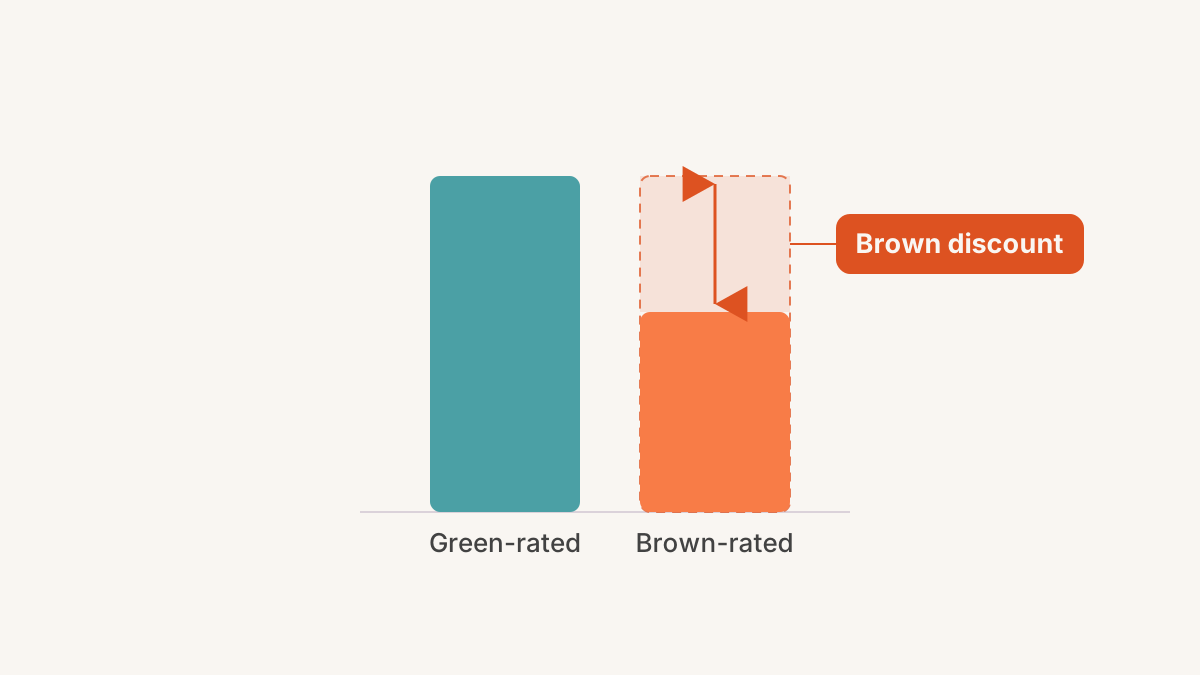
The term "brown discount" describes the growing price differential between energy-efficient and energy-inefficient buildings. It is the commercial property equivalent of the green premium — but in reverse, and arguably more significant, because it compounds: a building that is inefficient, unlettable, and unlendable simultaneously faces multiple haircuts.
What the evidence shows
Research from MSCI and JLL, published between 2022 and 2025, found consistent patterns across the UK commercial property market:
- Office buildings rated EPC A or B transacted at a premium of between 5% and 12% over comparable stock rated D or below
- Industrial assets showed a smaller but growing premium of 2–6%
- Retail was more complex — given sector-wide distress — but EPC ratings were increasingly cited in due diligence by institutional buyers
The discount is not yet universal. In tightly constrained markets — central London offices, prime logistics — supply scarcity can still overwhelm energy performance considerations. But in secondary markets, and for assets with shorter leases or weaker tenants, the brown discount is increasingly measurable.
Lenders are pulling back from brown assets
Equally significant is what is happening in debt markets. Several major UK lenders have introduced internal policies that limit LTV ratios on assets with poor EPC ratings, or that require a credible retrofit plan as a condition of refinancing. Green loans and sustainability-linked facilities — which carry rate incentives — are increasingly available only to assets that meet minimum EPC thresholds.
The practical consequence: an F-rated asset refinancing in 2027 may find its universe of willing lenders has narrowed considerably, and its available LTV is lower than a comparable E-rated building.
What this means for portfolio managers
The brown discount is not yet fully priced into the market — which means there is still time to act before it is. Asset managers who systematically assess their portfolios, identify the worst performers, and implement improvement programmes are making an investment in exit value, not just regulatory compliance.
The calculation is relatively straightforward: if a £5m asset is trading at a 7% brown discount, the potential upside from moving it from G to D is £350,000 — before rental uplift from improved marketability. Against that, the cost of targeted fabric and MEP improvements might be £80,000–£150,000. The return on capital is compelling.
Building Atlas helps asset managers run this calculation across their full portfolio — not just the assets where the problem is already obvious.